
In digital photography, most of the filters we used in the analogue era have become obsolete. This is especially true for the different color correction filters that were common in slide photography as well as for the color filters used in black and white photography. But there are three filters that cannot or only to a limited extent be simulated digitally.
Polarization Filters

The polarizing filter intensifies sky blue as well as yellow and orange tones and makes the clouds stand out more clearly. It also reduces reflections from non-metallic surfaces. While the more intense coloration can be simulated, the reduction in reflections can only be achieved with the filter. In the two photos below, the effect can be seen quite clearly. Note especially in the green of the foliage.
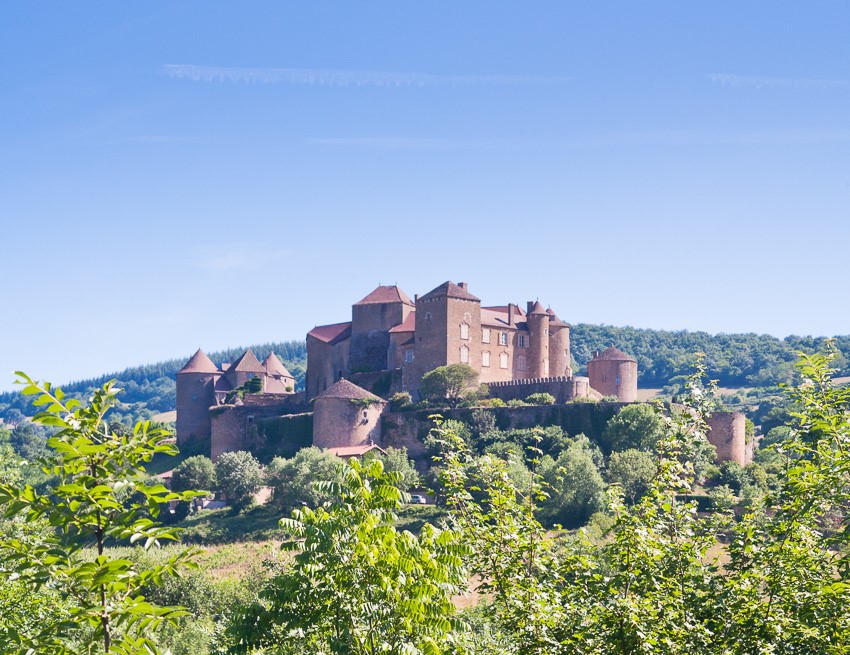
Without Polarizer

With Polarizer
Also note the clear and distinct structures of the clouds in the lower image, which are hardly noticeable in the image without polarizing filter.
The following picture shows the combination of an image without polarizing filter and with polarizing filter taken through a window in a zoo. Without polarizing filter the reflections in the glass are so strong that it is almost impossible to look into the enclosure. In the picture with polarizing filter the reflections are almost completely gone.
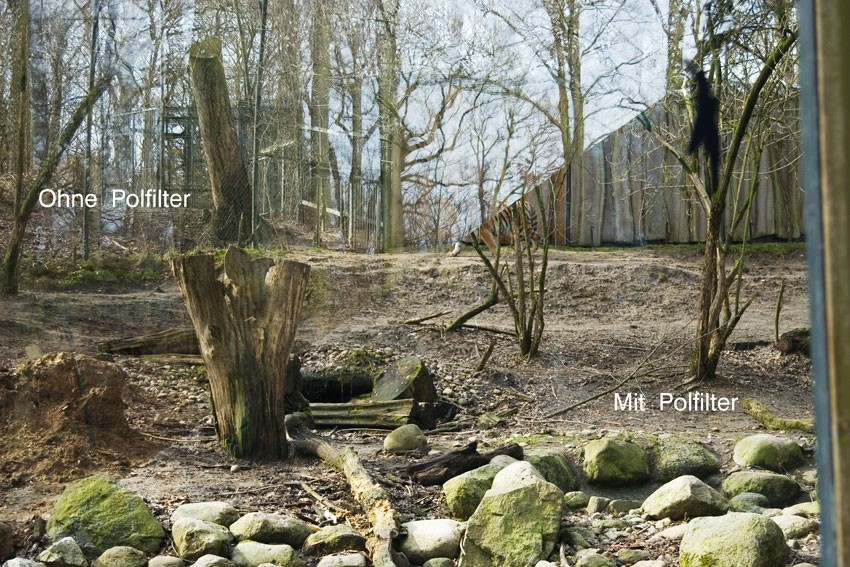
Top left without polarizer, bottom right with polarizer
It is interesting that our brain can largely block out these reflexes in the window pane. We usually have much less problems to perceive the inside of the enclosure, in contrast to the camera.
Since polarizing filters are quite expensive, you should buy a filter for the lens with the largest filter diameter. For lenses with smaller filter diameters you should buy so-called stepdown rings, which allow to use the large filter on the smaller lenses.
Neutral Density Filters
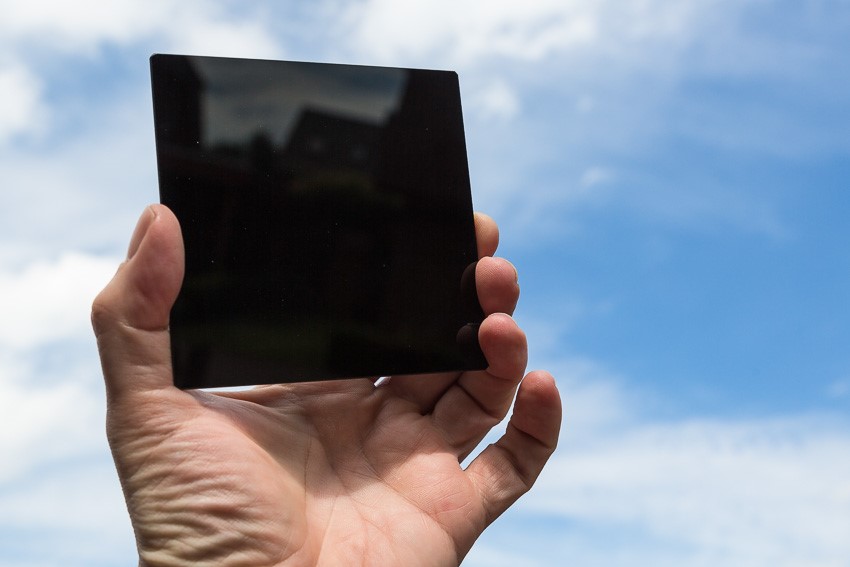
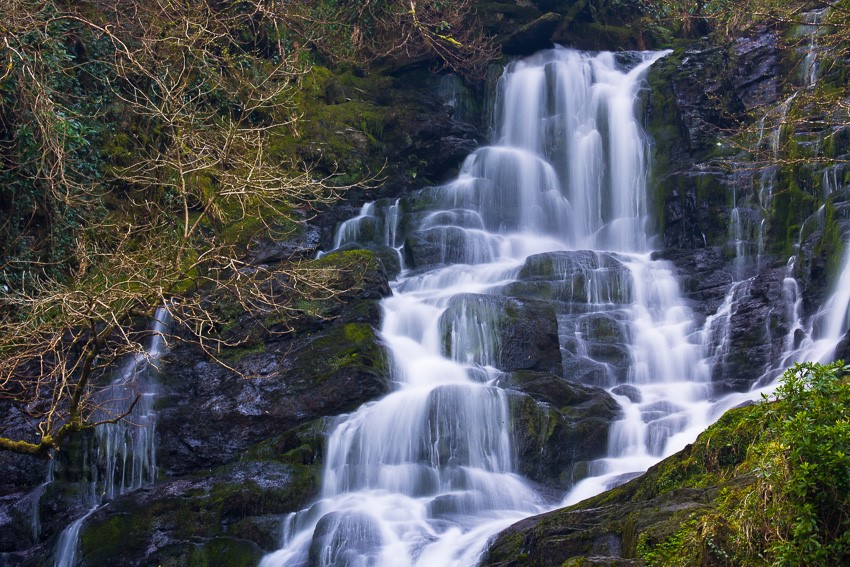
Neutral density (ND) filters simply reduce the amount of light reaching the sensor. They therefore allow very long exposure times even in sunshine. This is always desirable when, for example, flowing water is to be displayed. For this purpose, exposure times of several seconds are required. On a sunny day the exposure times without a ND-filter are usually much too short for this, even at f22 or f32.
Neutral density filters are available in different strengths. An ND 0.3 filter reduces the amount of light by one, an ND 0.6 by two, an ND 0.9 by three f-stops and so on. However, in order to achieve very long exposure times in sunshine, you need filters that reduce the amount of light by 8, 10 or more f-stops.
Graduated ND- filters

One half of a graduated neutral density filters is tinted grey while the other half is simply clear glass. Especially in landscape photography, they are used to darken the sky while at the same time reproducing the landscape in the correct brightness. This effect can also be achieved digitally via HDR photography. However, many landscape photographers still like to use a graduated ND-filter, for example in the case of fast moving clouds, which make HDR photography impossible or at least difficult.

Left without graduated ND-Filter, right with graduated ND Filter
Graduated ND-filters are available as screw-in filters or as rectangular filters. The rectangular filters, together with a matching filter holder, allow to shift the transition zone from grey to clear in height and adapt it to the subject. With round filters, on the other hand, this transition zone is always exactly in the middle of the image.
Graduated ND-Filters are also available in different strengths. Experience shows that the ND 0.3 filter is too weak for any practical purposes. The 0.6 and 0.9 Filters (i.e. 2 or 3 f-stops) are sufficient in most cases. If necessary, the two filters can be combined for a stronger effect.
Conclusion
These three filters are still very useful in digital photography. Since filters are a long-term investment, you should buy a filter of good optical quality. They will serve you for many years.

Leave A Comment