
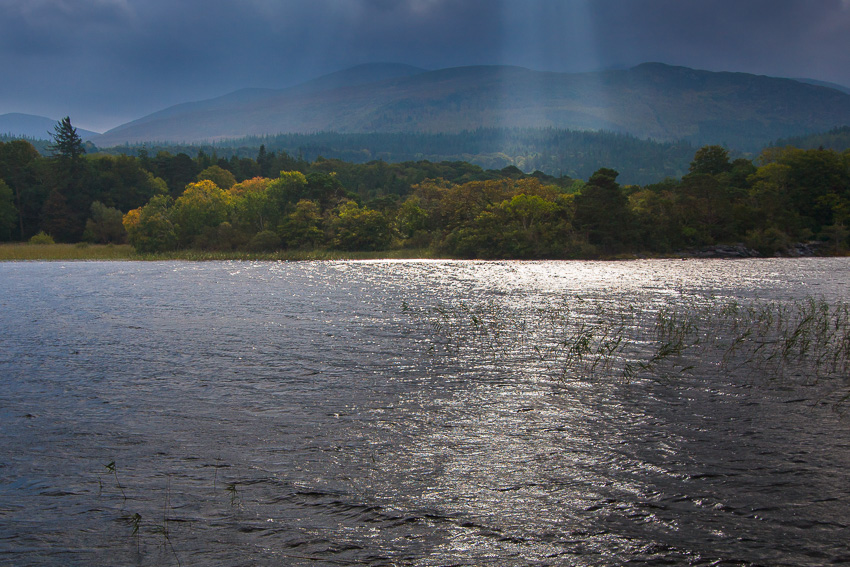
Light is without question one of the most important “ingredients” of a photograph. Natural light, that is the light coming from our sun, is by far the most important light source because we use it for most of our images. However, it is not the amount of light, i.e. the brightness, that is important. As long as there is some light, no matter how dim, we can take pictures. It is the quality of the light that makes or breaks an image.
What is light quality?
Please do not understand the term “light quality” in the sense of good or bad light. Depending on the subject, any quality of light can help or hurt the effect of your photo. The light quality covers several aspects:
- the type of light
- the direction of the light relative to the camera
- the color of the light
- contrast
- mood
The type of light
On a sunny day without clouds, the light is very direct. It has a distinct direction, and objects cast a dark, sharply defined shadow . This is called hard light. The opposite is diffuse or soft light. It has no clear direction, but illuminates the subject evenly from all sides. The shadows are not very pronounced. Overcast days and the twilight hours lead to this very soft light.
Between these two extremes, of course, there are all kinds of intermediate levels. Whether hard or soft light is better cannot be said in general terms. It depends very much on your subject and your image idea.
The image below was taken on a sunny day and the dark, clearly defined shadows are quite obvious

The direction of the light relative to the camera
Generally there are the following relative lighting directions:
- Front Lighting
- Side Lighting
- Back lighting
- Rim and Edge Lighting
Front lighting is the simplest and usually not very interesting lighting. It occurs when the sun is in your back and results in a rather flat image with little or no shadows. The image below is an example.

Side lighting usually results in much more interesting images. Objects in the image appear much more 3-dimensional compared to fron lighting because the they cast a shadow on one side and are much brighter on the other side:

Back lighting is often very interesting. However it requires a precise exposure of the image and often results in very hight contrast that may be higher than the dynamic range of the sensor. This can result in blown-out highlights and/or black, featureless shadows.

In the image above the contrast was well within the limit of the sensors dynamic range.
In some cases back lighting can result in very nice silhouettes. Silhouettes require a strong composition and a graphic subject. The image of the wrangler and his horse is an example.

Rim or edge lighting is a special form of back lighting. It works best with dark background. The light then creates a fringe of light around the subject as in the case of the squirrel.

In next weeks blog post we’ll look at the color of the light and the contrast.

Leave A Comment