
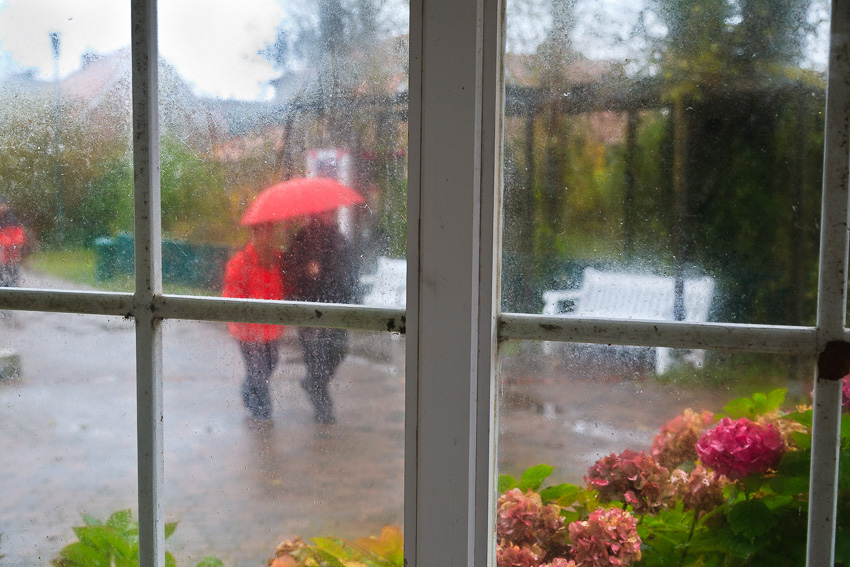
Yeah, if I knew that! I would only take top-notch photos. But since I produce usually more average than outstanding pictures, I guess I haven’t really found a patent remedy for seeing photographically. To be honest: I don’t even expect to ever find it. That would be boring. But over the years I have found one or the other aspect that I consider important if you want to take good and convincing photos.
The photo is flat
Trivial, I know. But still, it is perhaps the most important difference between the perceived reality and the photographic image. The photo lacks per se the optical depth (yes, I know, there are of course 3D photos, but honestly, who still has a 3D TV?). This missing depth can be created in different ways. One established method is to optically divide the image into a clearly recognizable foreground and background. Like in the following example:

This works especially well with wide-angle lenses.
Another option is often interesting for landscape photos. Especially in the morning and evening, when the sun is low, water vapor and dust in the air often create a nice spatial separation of landscape elements. For example, the farther away mountain ranges are from a camera, the brighter they appear. This effect is sometimes called “aerial perspective,” although in a strict sense it has nothing to do with perspective at all. Here is an example:
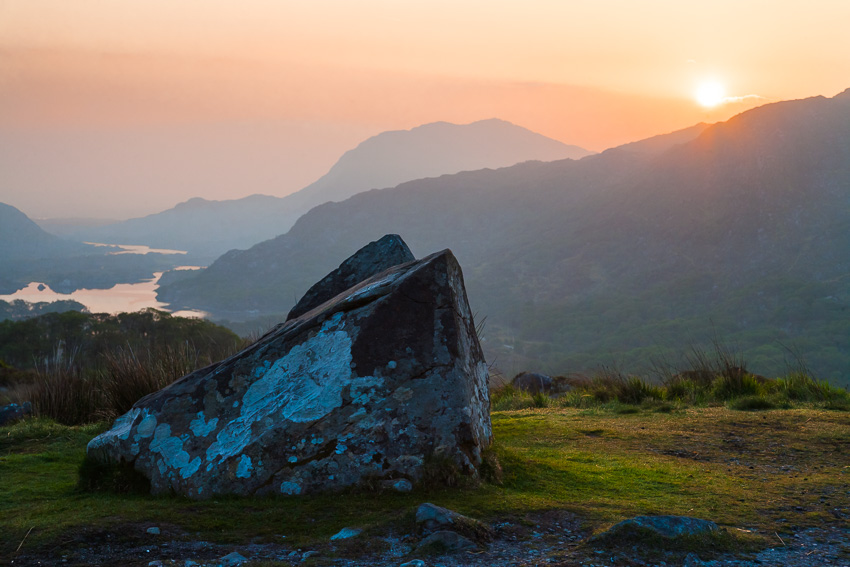
So remember: The image should have depth!
Well, okay, it’s not quite that simple. Sometimes the exact opposite also works:
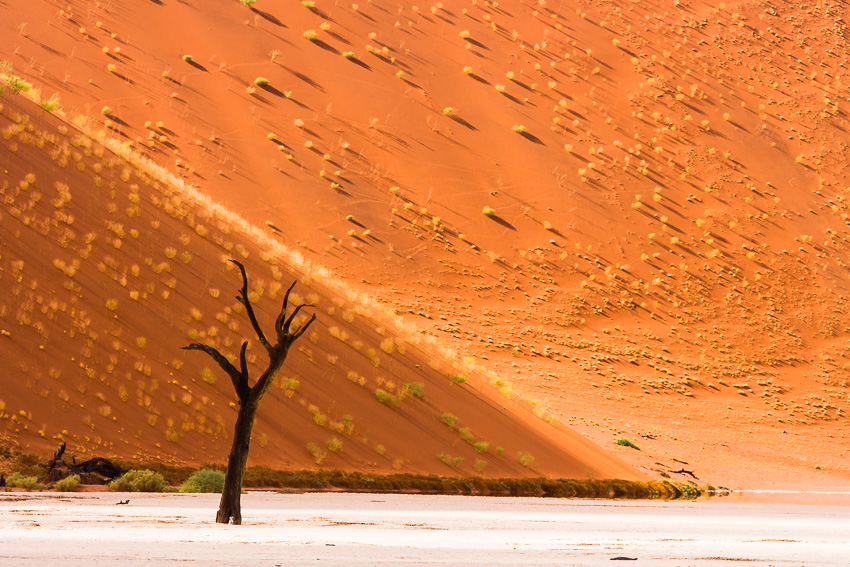
Here, the three-dimensional reality has been deliberately reduced optically to a single layer by using a long focal length (300 mm). This results in a very graphic image, which precisely did not correspond to our perception on site.
What to show and what not to show?
This is a crucial question. When you press the shutter release, you also determine the frame of the picture. Since we can never show “everything” in a photo, we have to leave something out. As a matter of fact, we usually have to leave out even more than we could ever show. This is not a bad thing. On the contrary, we should always ask ourselves whether we can still leave something out. The “big picture” rarely results in an exciting photo.
If you like to photograph airplanes, like I do, you almost automatically tend to photograph the plane in its entirety. For an aircraft spotter, that’s okay, but it can be much more exciting to explore the graphic characteristics of the subject. Again, an example:
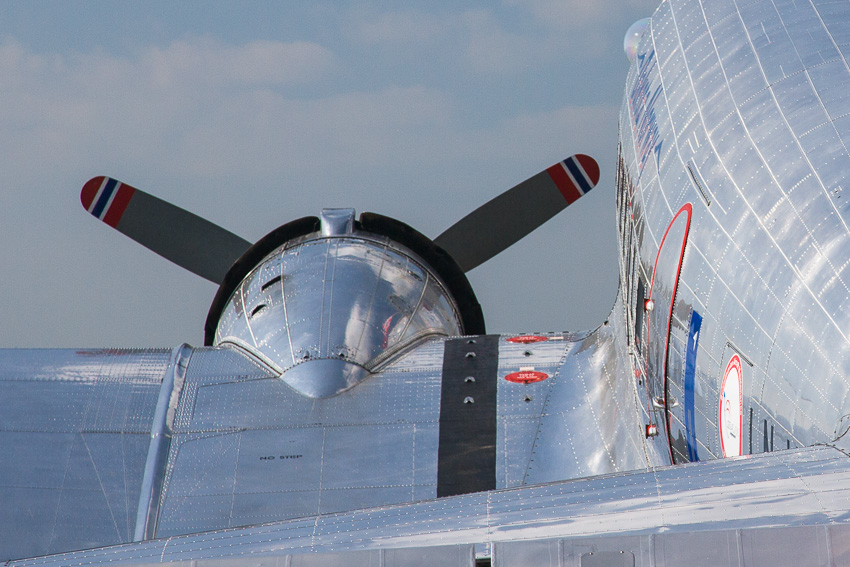
Less can be more indeed!
We see everything in focus
Our eye is always moving and refocuses constantly. As a result, a subject always appears sharp to us from front to back. The camera is different. It can only really focus on a distance within the subject. This is both an advantage and a disadvantage. With some subjects, it can be annoying if the foreground and/or background are not really sharp. With other subjects, on the other hand, selective sharpness is an advantage because the photo looks exactly different from how we perceived the subject.
You should therefore carefully consider whether a subject requires selective sharpness or a complete depth of field. As a little rule of thumb: Portraits usually work better with a rather selective sharpness, landscapes with a complete depth of field.


But as always: No rule without exception.
I could probably say a lot more on the subject of “seeing photographically”. Maybe I will write a second part sometime.
As always, please feel free to leave a comment. I’m looking forward to it.

Leave A Comment