
Depth of field is one of those things. It’s probably only through photography that we’ve really become aware that a lens can only really bring subjects into focus at a certain distance from the camera. Our eyes are not capable of focusing on everything either. But because it constantly refocuses, the brain can construct a consistently sharp image. Our surroundings therefore always appear sharp to us from front to back.
Selective focus is an invention of photography
In classical painting, selective focus, as created in photography by an open aperture, was completely unknown. The old masters painted their pictures as they perceived the scene. That is, with complete sharpness from close-up to infinity. Something else would never have occurred to them.
In photography, it’s the other way around: a photo is always really sharp only in the plane that was focused on. All image elements located in front of or behind the focal plane are more or less out of focus. With a small aperture, we can reduce this blur so that objects that are not in the focal plane appear sharp to us. But they are still not really sharp. The fact that they appear sharp to us in the photo is only due to the limited resolving power of the eye.
Photography therefore creates images that we do not necessarily perceive in this way. Selective focus, that is, the restriction of the depth of field to a small area, does not correspond to our experienced reality. This is probably why this effect is so popular in many photographs. But there are also subjects that simply look better with a complete depth of field. And in such cases, you sometimes come up against technical limits.
When the depth of field is not enough
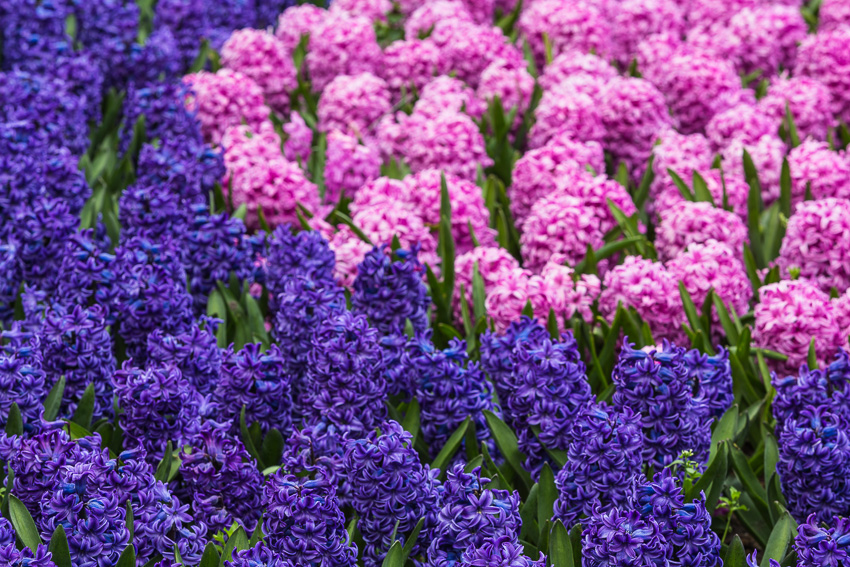
In this flowerbed at Keukenhof, I feel that the depth of field is insufficient because I want the structure of the flowers, even the ones at the back, to be sharp. Just as I perceived it myself on location. But even at f/22, the depth of field was not sufficient to achieve complete sharpness.
When we were still working with slide film, we had to live with this technical limitation. With digital photos, we can solve the problem quite elegantly by focus stacking, i.e. combining two or more images with different positions of the plane of focus. For comparison, here the photo with complete depth of field:
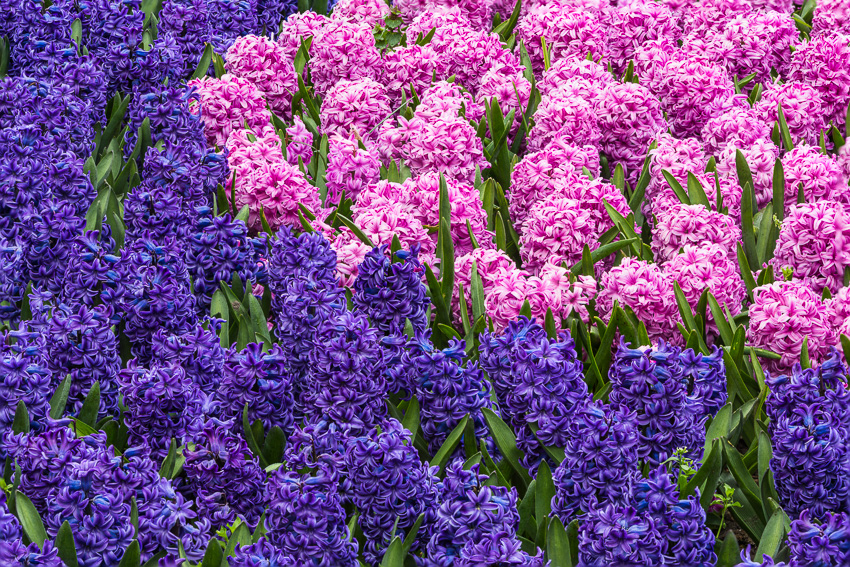
This variant corresponds to my perception much more than the image with limited depth of field. Therefore, I do not consider the combination of several images in this case as manipulation. From my point of view, it is merely the correction of a technical deficiency of photography, namely the impossibility to depict a subject with complete depth of field.
Yes, I know, in this case a tilt-shift lens would have helped. But I don’t have one…
As ususal, I’m looking forward to your comments and thoughts.

Leave A Comment