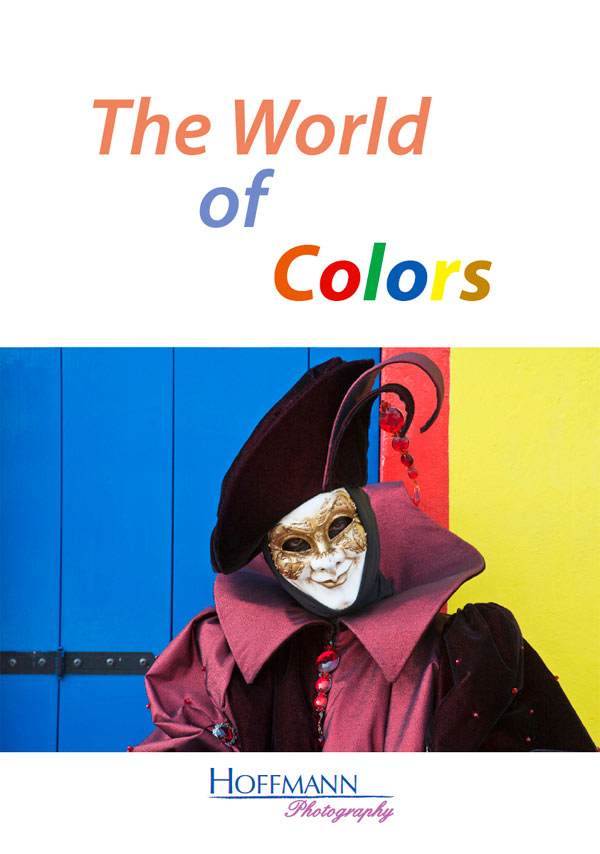
The world is full of colors that want to be photographed. This online course is about taking photos where the main subject fades into the background and the effect of the image is primarily achieved by interesting color combinations (of course, it doesn’t hurt if the main subject is exciting… ).
While in classic black and white photography shapes and especially contrasts characterize the motive, we have another dimension in color photography: Colors that make our world so colorful.
Besides a little color theory, we will mainly deal with many practical examples that demonstrate the full range of color effects. After the theory, it’s your turn: go out and take your own images for each lesson. You will see your surroundings with different eyes once you pay special attention to colors and color combinations..
What you can expect
You can expect four lessons of intensive online photo workshop. Detailed course material with many sample photos will inspire you to create your own images. For each assignment you will take your own pictures, which your instructor will then discuss in detail and perhaps suggest improvements.
Lesson 1: Color saturation, achromatic colors
Color saturation greatly affects the effect of colors. It ranges from dark, blackened colors to very clear, pure colors to pastel tones. A related topic is the combination of variegated and achromatic (black, white, gray) colors, which can lead to interesting image results.
lesson 2: Warm colors, cool colors and similar colors
Colors are perceived and felt differently. Often yellows, oranges and reds are perceived as “warm” colors, while blues, cyans and greens tend to be evaluated as “cool”. Let’s see how combining a warm basic mood with a cool accent (or vice versa) can help create exciting images. Also of interest can be photos that consist of only warm or cool hues.
Lesson 3: Complementary Colors
The juxtaposition of complementary colors has always been a popular stylistic device. Examples of complementary colors can be found everywhere once you learn what to look for.
Lesson 4: Monochrome images and color photos without color
Monochromes, or single-color images, often have a special appeal. However, the absence of other colors usually implies that the subject has clear structures and contrasts. This also applies to motifs that contain little or no color and consist mainly of gray tones.





Reviews
There are no reviews yet.